
Table of Contents
- What Fashion Affiliate Marketing Is and How It Works
- Finding and Evaluating Fashion Affiliate Programs
- Real Fashion Affiliate Marketing Examples That Generate Sales
- Affiliate Marketing Content Ideas for Fashion Creators
- How to Track Affiliate Sales and Optimize Your Performance
- Applying to Fashion Affiliate Programs and Getting Approved
- Realistic Earnings, Compliance, and Long-Term Growth
- Conclusion
- Frequently Asked Questions
Last Updated: October 21, 2026
What Fashion Affiliate Marketing Is and How It Works
Fashion affiliate marketing is a performance-based business model where you earn commissions by promoting clothing, accessories, and designer products from fashion brands. You share unique affiliate links with your audience.
This isn’t passive income. It requires strategy, audience building, and content that genuinely helps people find products they want to buy.
The core mechanics: affiliate links, tracking, and commissions
Here’s how the system actually works. A fashion brand gives you a unique tracking link.
When a customer buys through your link, the system records the conversion. You earn a commission.
The tracking link is everything. Without it, the brand has no way to know the purchase came from you.
Key mechanics:
- You get a unique affiliate link
- Customer clicks your link and lands on the brand’s store
- Cookies track the customer for 7-90 days (varies by program)
Why fashion brands use affiliate partners
Brands use affiliate marketing because they only pay for actual sales. No sale, no cost. It’s pure performance-based marketing.
For brands, this means:
- Lower marketing costs than traditional advertising
- Access to new audiences through creators and influencers
- Built-in quality control (only creators with engaged audiences succeed)
For you, this means opportunity. Fashion brands are constantly looking for new partners. If you have an audience interested in clothing, accessories, or style, brands will work with you.
Finding and Evaluating Fashion Affiliate Programs
Not all fashion affiliate programs are worth your time. Commission rates vary wildly. Payout terms differ. Some brands track sales for only 7 days. Others give you 30-90 days of attribution.
Start by identifying which fashion brands your audience actually loves. Then check if they have an affiliate program.
Commission rates, payout structures, and payment terms
Commission rates in fashion typically range from 5-20% of the sale price. Higher-end designer brands sometimes offer lower rates (5-8%) because their margins are smaller.
But commission rate isn’t the whole story. Look at:
Payout terms:
- Minimum earnings threshold before payout (some require $100, others $25)
- Payment frequency (monthly, quarterly, or on-demand)
- Payment method (direct deposit, check, PayPal)
Return policy impact:
Some programs allow returns within 30-60 days. If a customer buys through your link but returns the item, your commission gets reversed.
Ask yourself: Which programs have reasonable terms for your audience?
Clothing, accessories, and designer product categories to consider
Fashion affiliate marketing covers multiple categories. Each has different earning potential and audience expectations.
Clothing and apparel:
- Fast fashion (Shein, H&M, Zara)
- Sustainable fashion (Patagonia, Everlane)
- Luxury brands (Net-a-Porter, Farfetch)
Accessories:
- Handbags and wallets
- Shoes and footwear
- Jewelry and watches
Designer and luxury:
- Luxury conglomerates (LVMH brands)
- Designer boutiques
- Premium resellers
Your niche determines your commission potential. A blog about sustainable fashion will attract readers interested in ethical clothing brands. A style influencer focused on luxury accessories can promote higher-priced items with bigger commission payouts.
The key is relevance. Promote products your audience actually wants.
Real Fashion Affiliate Marketing Examples That Generate Sales
Successful fashion affiliate marketing doesn’t look like a catalog dump. It looks like genuine style advice.
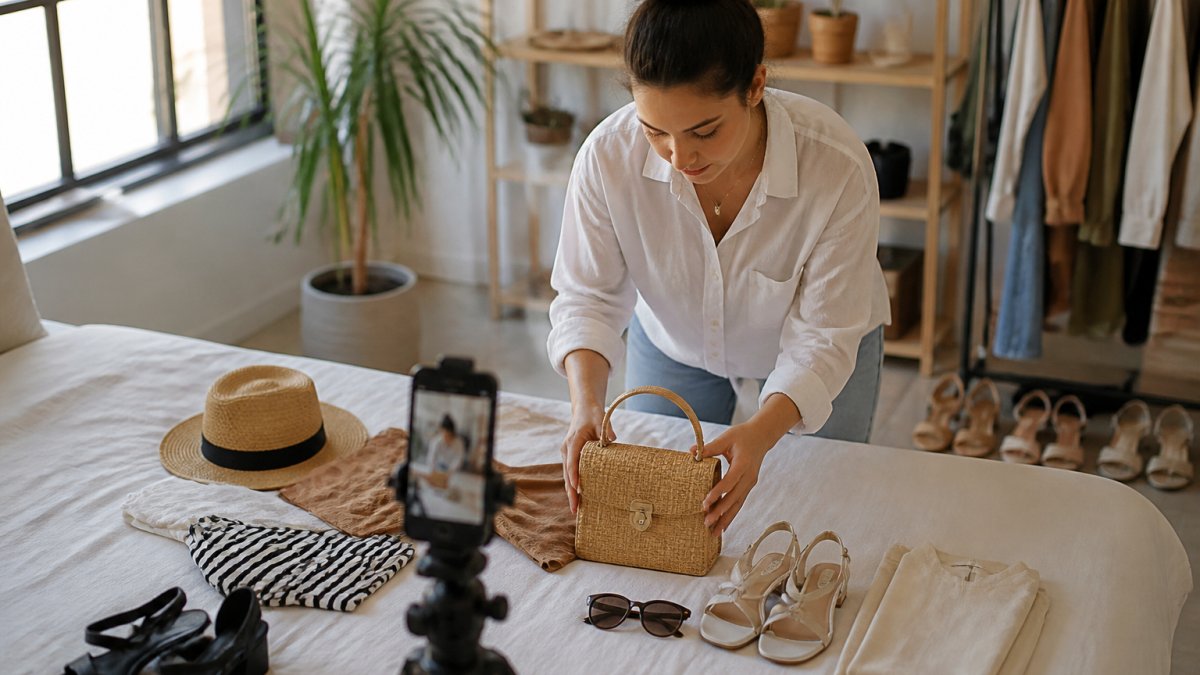
Content types that convert: curated collections and product recommendations
The best performing content gives people a reason to click. It solves a problem or inspires a purchase decision.
Curated collections typically include:
- A specific use case or problem
- 3-7 hand-picked products
- Why you chose each one
Product recommendations in context:
Style guides, seasonal lookbooks, and outfit combinations naturally include products.
Comparison content:
“Zara vs. H&M: Which Brand Fits Your Body Type?” drives clicks because it answers a real question.
How fashion creators and style influencers position affiliate content
The best creators don’t hide their affiliate links. They disclose them clearly and position them as recommendations.
Transparency builds trust.
Style influencers use several positioning strategies:
Authority positioning:
“I’ve worn this brand for three years. Here’s why I recommend it.”
Personal story positioning:
“I spent £500 on jeans before finding this brand. Now I buy three pairs a year.”
Seasonal positioning:
“These are the accessories I’m actually wearing this fall. Here’s where to get them.”
Each approach works because it’s specific and credible.
Affiliate Marketing Content Ideas for Fashion Creators
You need a steady stream of content ideas. Seasonal trends, product launches, and lifestyle moments all create affiliate opportunities.
Seasonal campaigns and trending product promotions
Fashion moves in seasons. Use that rhythm.
Spring/Summer content ideas:
- Lightweight fabrics and breathable clothing
- Sandals, sneakers, and summer footwear
- Sunglasses and sun protection accessories
Fall/Winter content ideas:
- Layering basics and thermal wear
- Coats, jackets, and outerwear
- Boots and winter footwear
Year-round trending topics:
- New season launches from major brands
- Viral fashion trends (trending on TikTok or Instagram)
- Celebrity style recreations
Post these ideas 4-6 weeks before the season. Summer content performs best in April and May. Winter content peaks in August and September.
Banner ads, text links, and creative assets from your program
Most affiliate programs provide promotional materials. Use them.
What programs typically provide:
- Product images and lifestyle photos
- Banner ads (leaderboard, sidebar, mobile)
- Text link copy
Don’t just copy-paste. Customize these assets to match your brand voice and audience expectations.
Start or grow an online business. Learn from the digital marketing experts →
A banner ad that looks generic performs worse than one you’ve edited to fit your site’s design. Your audience trusts your aesthetic. Don’t break that trust with clunky promotional materials.
How to Track Affiliate Sales and Optimize Your Performance
You can’t improve what you don’t measure. Most affiliate programs give you a dashboard showing clicks, conversions, and commissions.
Understanding click-through rates, conversion rates, and attribution
Click-through rate (CTR):
This is clicks divided by impressions.
A 1-2% CTR is average. A 3-5% CTR is strong. Higher than 5% means your audience trusts your recommendations.
Conversion rate:
This is sales divided by clicks.
A 2-3% conversion rate is typical for fashion.
Attribution window:
This is how long the system tracks a customer after they click.
Monitoring commissions, returns, and reversals
Not every click turns into money. Track what’s actually happening.
Commission reversals happen when:
- Customers return items within the return window
- The customer used a coupon code (some programs exclude these)
- The sale was flagged as fraudulent
Check your dashboard weekly. Look for patterns. If one product has a high return rate, stop promoting it. If one brand consistently pays on time, prioritize their links.
Applying to Fashion Affiliate Programs and Getting Approved
Most fashion brands want to work with you. But they need to know you have an actual audience.
Building credibility before you apply
You don’t need 100,000 followers to get approved. You need proof that people listen to you.
Build credibility with:
- A blog with consistent monthly traffic (even 500 visitors per month helps)
- Social media accounts with engaged followers (1,000+ is solid, but not required)
- An email list (even 200 subscribers shows commitment)
If you’re brand new, start with affiliate networks like ShareASale, CJ Affiliate, or Impact. These networks accept smaller creators and give you access to thousands of brands at once.
Then apply directly to brands you genuinely love. Direct programs often have better terms than network programs.
What fashion brands look for in affiliate partners
Brands evaluate three things:
1. Audience alignment:
Does your audience match their target customer? A luxury brand won’t work with a budget fashion blog. A sustainable brand won’t work with a fast-fashion influencer.
2. Traffic quality:
Brands check your traffic sources and audience demographics. They want to know your visitors are real people who might buy.
3. Content quality:
They read your blog or watch your videos. Is your content professional? Does it match their brand image?
When you apply, include:
- Links to your best content
- Monthly traffic or engagement stats
- A brief description of your audience
Generic applications get rejected. Personalized applications get approved.
Realistic Earnings, Compliance, and Long-Term Growth
This is where most guides lie. Let’s be honest about what you can actually earn.
Commission economics: profit margins and earnings timelines
If you promote a £100 item with a 10% commission, you earn £10 per sale.
That’s 3-4 sales per day. Achievable? Yes. But it requires audience size and consistent traffic.
Realistic earnings by audience size:
| Audience Size | Monthly Traffic | Realistic Monthly Earnings |
|---|---|---|
| 500-1,000 followers | 500-1,000 visits | £50-£200 |
| 5,000-10,000 followers | 2,000-5,000 visits | £200-£1,000 |
| 25,000-50,000 followers | 10,000-25,000 visits | £1,000-£5,000 |
| 100,000+ followers | 50,000+ visits | £5,000+ |
These numbers assume:
- 2-3% conversion rate
- 10-15% average commission
- Consistent content and promotion
Your actual earnings depend on niche, audience engagement, and product fit.
The timeline:
Most creators see their first commission within 30-60 days.
Disclosure requirements, tax obligations, and platform compliance
Affiliate marketing has rules. Break them and you lose your account.
Disclosure requirements:
You must clearly disclose that you earn commissions. This isn’t optional.
Use phrases like:
- “I earn a commission if you buy through this link”
- “This is an affiliate link”
- “As an Amazon Associate, I earn from qualifying purchases”
Place disclosures near your affiliate links, not buried in fine print. The FTC requires clear, prominent disclosure (the FTC).
Platform compliance:
- Instagram: Use the “paid partnership” tag or #ad
- TikTok: Disclose in video description
- YouTube: Use the affiliate disclosure in video description
- Blog: Add disclosure near links or at top of post
Tax obligations:
Affiliate income is taxable income. In the UK, you’ll need to report it to HMRC. Keep records of:
- Monthly commission payments
- Program names and dates
- Total annual earnings
If you earn over £1,000 per year from self-employment (including affiliate income), you may need to register as self-employed (Become a sole trader: What a sole trader is).
At Digital Class Masters, we help entrepreneurs understand the business side of affiliate marketing, including compliance strategies that keep your income stream protected while you scale.
Conclusion
Earning commissions through fashion affiliate marketing requires three things: an audience that trusts you, products you genuinely recommend, and systems that track what actually works.
Start with one fashion brand you love. Build content around it. Track your clicks and conversions.
The real opportunity isn’t in getting rich quick. It’s in building a sustainable income stream that grows as your audience grows.
Frequently Asked Questions
How does fashion affiliate marketing actually work?
Fashion affiliate marketing works by promoting clothing, accessories, or designer products through unique tracking links. When someone clicks your link and makes a purchase, the retailer tracks that sale and credits you a commission. You earn a percentage of the sale price without handling inventory, shipping, or customer service. The tracking link contains your unique affiliate ID, so the fashion brand knows exactly which sales came from your promotion.
What commission rates can I expect from fashion affiliate programs?
Fashion affiliate programs typically offer 5-15% commission on sales, though some luxury brands or exclusive programs may offer higher rates. The commission rate depends on the retailer, product category, and your traffic quality. Accessories and apparel generally fall in the mid-range. Before joining, compare commission structures across programs, a 10% rate from high-volume traffic often beats a 15% rate with fewer conversions. Always check payout minimums and payment schedules too.
How do I track affiliate sales and know if I’m actually earning commissions?
Most fashion affiliate programs provide a dashboard showing clicks, conversions, and pending commissions. You track performance through your unique affiliate link and ID. Key metrics include click-through rate (how many people click your link), conversion rate (how many clicks result in purchases), and earnings per click. Monitor which products, content types, and promotion channels drive the most conversions. Returns and reversals can affect your final commission, so review your dashboard regularly to spot trends and optimize.
Do I need a large following or blog to make money from fashion affiliate marketing?
No, but you do need an audience and a way to reach them. You can succeed with a smaller, engaged following on social media, a niche email list, or even a modest blog with targeted content. Quality matters more than quantity, 1,000 highly interested followers who trust your recommendations often outperform 100,000 disengaged followers. Start by building trust in a specific fashion niche, then apply to affiliate programs that align with your audience’s interests.