Quick take: You don’t need to show your face to run a YouTube channel. Meditation and sleep content, tutorials, finance commentary, true crime stories and compilation videos all work with just a voice, good visuals and a regular upload schedule. Pick one, make five videos and see whether you enjoy the process before you spend money on anything.
If you have ever looked for faceless YouTube channel ideas, you will know the appeal.
Plenty of people would like to make videos. Far fewer want to sit in front of a camera.
I understand that completely. The good news is that a lot of popular channels never show the person behind them at all. There is a voice, some footage or slides, and that is it.
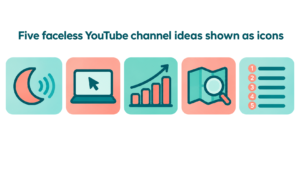
So which types of channel actually suit this? Here are five that come up again and again, along with what each one involves and how it can earn.
Why Faceless YouTube Channels Are Getting So Popular

A big part of it is how people watch now.
Many viewers have YouTube on in the background while they work, study or wind down at night. They are listening more than watching. A calm voice or a good story matters far more to them than a face on screen.
The tools have changed too. Stock footage libraries, screen recording software, AI voice tools and simple editing apps mean one person with a laptop can make a decent video. Not long ago that would have needed a small team.
Ad revenue isn’t the only way to earn either. Faceless channels can also make money from sponsorships, affiliate links, Digital products and memberships.
And some people simply prefer to keep their private life separate from their online business. That is a perfectly good reason in itself.
Before you get carried away, though, remember that YouTube won’t pay you anything from ads until you join its Partner Program. The full requirements are on [YouTube’s own help page](https://support.google.com/youtube/answer/72851), and the main ones are 1,000 subscribers plus 4,000 hours of public watch time in the last 12 months. That takes time, whatever anyone tells you.
1. Meditation and Sleep Content
Guided meditations and sleep stories are a natural fit for a faceless channel. Nobody wants to watch a presenter while they are trying to fall asleep.
All you really need is a calm voice, some soft background music and simple visuals, such as slow nature scenes or gentle animated patterns. Videos tend to be anywhere from 10 to 30 minutes long, covering breathing exercises, body scans or relaxing stories.
The big advantage here is that this content doesn’t date. A sleep video you publish today can still be found by someone searching for help to switch off in a year’s time.
Beyond ads, creators in this niche sell longer meditation packs, downloadable audio and members-only sessions.
A narrower focus usually works better than general “relaxation”. Think sleep stories for adults, or short morning meditations. People come back night after night to a channel they trust, so consistency matters more than fancy production. One word of caution: stay away from promising to treat anxiety or insomnia. That is a job for a doctor, not a YouTube video.
2. Tutorials and Explainer Videos
People go to YouTube to learn how to do things. That makes tutorials one of the most practical faceless formats there is.
Software how-tos, maths and science explainers, language lessons and work skills all fit. Someone searching “how to do X” already wants the answer, which is why this type of content can do well.
You don’t need a camera at all. Screen recording software lets you show each step on screen while you talk the viewer through it.
There are several ways to earn from it. Tutorial channels often sell courses, templates or resources, and software companies sometimes sponsor channels that cover their tools well.
Search is your friend with this one. A clear video answering a common question can keep being found for a long time. Pick subjects you genuinely know, though. Viewers can tell very quickly when someone is bluffing.
If you plan to use AI to help write your scripts, my post on [how to write better AI prompts] will save you a lot of frustration.
3. Stock Market and Finance Commentary
Finance channels work well without a presenter, because viewers care about the information rather than who is delivering it.
The usual format is screen recordings of charts, headlines and data, with a voiceover explaining what is going on. Tools like [TradingView] are popular for the charts.
Most successful channels stick to one area. Crypto, dividend shares, or the bigger economic picture each attract their own audience.
Money can come from affiliate links to trading platforms and financial tools, paid courses, private communities or memberships offering deeper analysis.
I would add one honest note here. Talking about money carries responsibility. Be clear that you are sharing your views, not giving financial advice, and never promise people returns.
4. True Crime and Mystery Stories
Unsolved mysteries, cold cases and true crime stories have a huge following. Fans often watch a channel’s videos one after another, which is great for watch time.
The format is strong narration over news clips, archive photos, maps and atmospheric footage. A recognisable storytelling style, whether that is the voice or the way the videos are edited, helps a channel stand out.
The research is the hard part. Stick to public records, court documents and reliable news sources, and get your facts right.
Memberships are common in this niche, offering bonus episodes or early access. Some creators turn their videos into podcasts as well, which gives them a second audience.
Remember that these are real cases with real victims and families behind them. The channels that treat them with respect, rather than going for shock value, tend to build the most loyal audiences.
5. Compilation and List Videos
“Top 10” and “best of” videos are about as simple as faceless content gets. You gather footage or information around a theme and present it in an entertaining way.
Luxury homes, abandoned places, unusual animals, historic photos, travel spots and sports highlights all have keen audiences. People are naturally curious about rankings and extremes.
You do have to add something, however. Good editing, a clear voiceover and useful context are what make a compilation worth watching, rather than something viewers could find for themselves in two minutes.
As well as ads, these channels can earn from affiliate links (travel sites or products featured in the video, for example) and short digital guides.
Copyright is the big trap. Only use footage you are allowed to use: properly licensed stock footage, Creative Commons material or your own clips. Otherwise you risk strikes against your channel.
How to Choose Your Faceless YouTube Channel Niche
Start by looking at what already works.
Search for your topic on YouTube and look at the channels that come up. Are their recent videos getting steady views? Do they promote products, courses or affiliate offers in their descriptions? If nobody in the niche is earning anything, that tells you something.
Next, type your topic into the YouTube search bar and note the suggestions that appear. Those are things people are actually searching for. Look at the top few videos for each one, especially any published in the last few months.
Then test it. Write scripts for three to five videos and record them before you buy any equipment or software. You will find out quickly whether you can keep it up and, just as importantly, whether you enjoy it.
That last point matters more than people think. I wrote in [The Illusion of Progress] about how easy it is to feel busy without getting anywhere. Researching niches for weeks can be exactly that. Making five actual videos is real progress.
Finally, be patient. Reaching YouTube’s Partner Program takes regular uploads over months, and the early income is usually very small. Plan for that, and it won’t knock you off course.
Want to Take a Look?
If you like the idea of a faceless channel but would rather follow a structured plan than piece it together yourself, there is a training course called [A.I Faceless Monetisation]
It covers scripting, using AI to speed up production and building an audience for a channel where you never appear on camera.
There is no need to take my word for it. Have a look at what the training includes and decide whether it suits you.
[Find out more about A.I Faceless Monetisation]
Be the first to comment on "5 Faceless YouTube Channel Ideas Worth Trying in 2026"