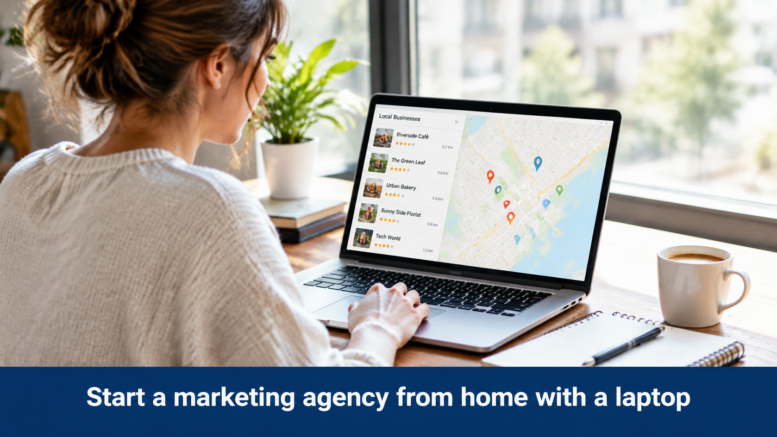
Starting a marketing agency sounds like something you need years of experience for.
A portfolio. A list of past clients. Some sort of qualification.
But think about it from a local business owner’s point of view. A plumber, a dentist or a restaurant owner doesn’t really care about your CV. They want more customers coming through the door, and they will happily pay someone who can help them get there.
That changes things. If you want to start a marketing agency with no experience, it means the question isn’t “am I qualified?” so much as “can I solve one specific problem well?”
Disclosure: This post contains affiliate links.
If you purchase through one of my links, I may receive a commission at no additional cost to you.
Why 2026 Is a Good Time to Start a Marketing Agency
Most small businesses know they need to be visible online. A lot of them still aren’t doing anything about it consistently, usually because they are too busy running the business itself.
That gap is where a new agency can fit in.
The tools have also become far more affordable. Things that once needed a team and expensive software can now be handled by one person with a laptop, some AI help and a few low-cost platforms.
You don’t have to be local to your clients either. Video calls and screen sharing mean you can work with businesses in other towns without leaving home.
And small business owners often relate better to someone building their own business than to a big agency that doesn’t understand their day-to-day problems.
None of this makes it easy, of course. It just means the starting line is closer than most people think.
The Biggest Mistake: Offering Everything
This is the trap I suspect most beginners fall into.
You set up a website and list every service you can think of. Social media, SEO, email marketing, paid ads, content, web design. More services must mean more chances of finding work, surely?
In practice, it tends to do the opposite.
A restaurant owner who wants to fill more tables is looking for someone who has solved that exact problem. “I do everything marketing” doesn’t sound like that person. It sounds like someone still working out what they do.
Picking one service lets you learn it properly, build a repeatable process and explain clearly what you offer. Once you have a handful of clients and some real results, you can always add more.
[The Local Lead Generation Blueprint] is built around this focused approach, and it covers which services tend to work best for beginners.
Step 1: Choose One Niche and One Service
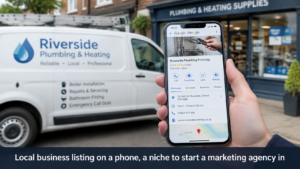
Generalist agencies need big portfolios and years of credibility. A specialist can position themselves as the go-to person in a small area much more quickly.
The simplest approach is to pick one type of local business and one problem they have.
Some examples:
– Restaurants that struggle with online reviews
– Dental practices that need more new patients
– Plumbers and electricians who don’t show up well on Google Maps
Each of these has a clear problem and a result you can measure. That makes the conversation with a potential client far more straightforward.
Optimising a [Google Business Profile] for local service businesses is a good example of a starting point. It is a skill you can learn in a few weeks, and the results (more visibility on the map, more phone calls) are easy for a business owner to understand.
Starting with one service also keeps everything else simple. Pricing is easier. Delivery is easier. You spend less time learning and more time doing.
It is the same lesson I keep coming back to on this blog: do one thing properly before adding the next. I wrote about that in [an earlier post]
Step 2: Build Credibility Without a Portfolio
So how do you look credible when you have no clients yet?
You show how you think.
Put together a few worked examples. Take a real type of business, look at where it stands online and explain what you would change and why. Label them honestly as examples, but make them detailed enough that a business owner can see you know what you are talking about.
Next, set up a simple one-page website. It only needs to say who you help, what problem you solve and how to get in touch. Clear beats clever here.
Then offer a free audit to two or three local businesses. Give them genuinely useful advice, and if they found it helpful, ask whether they would be willing to give you a short review.
Local Facebook groups and business networking events can help too. The aim is to be useful rather than to sell. Answer questions, share what you know and let people get to know you.
Step 3: Find Your First Clients
Waiting for referrals won’t get you very far at the beginning. A direct approach works better.
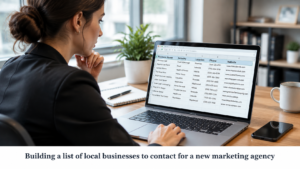
Start by making a list of around 20 local businesses in your chosen niche. Google Maps is ideal for this. Look for businesses with no Google Business Profile, a half-finished one, very few reviews or an outdated website.
A simple spreadsheet is enough. Business name, contact details and a note of what you spotted.
Then get in touch. Keep the message short and specific. Tell them what you noticed, explain how fixing it could bring them more customers and offer a free audit or a quick call.
Generic pitches get ignored. A message that shows you have actually looked at their business stands out.
Follow up, too. Business owners are busy, and plenty of them will simply miss your first message.
Talk about what better visibility could mean for them (more calls, more bookings) rather than the technical details of how you would do it.
[The blueprint] includes outreach templates for this stage, which could save a lot of guesswork if writing that first message feels awkward.
Step 4: Deliver Well, Then Grow Slowly
Your first clients matter more than anything else, because everything after them builds on what you do for them.
Agree expectations at the start. How often you will be in touch, what you will deliver and how you will both know it is working.
Keep track of the work somewhere simple. A spreadsheet or a free tool like Trello is plenty.
Write down your process as you go. How you onboard a client, what you do each month, how you report back. The second client is much quicker when you aren’t working it all out again from scratch.
Ask for a testimonial when you have just delivered a good result, while it is fresh in their mind.
And don’t take on everyone at once. Too many clients before your process is ready is a quick route to burnout and poor work. Get three to five clients looked after properly first, then grow from there.
Where to Go From Here
You can start a marketing agency without experience. What you can’t skip is focus and consistent action.
Choose one service. Learn it properly. Contact the local businesses that need it.
Every agency owner started without clients and without a portfolio at some point. The ones who get somewhere tend to be the ones who follow a clear plan, rather than trying to figure out everything alone.
There are no guarantees, and anyone who promises you clients by a certain date should be treated with caution. But a clear, simple plan gives you something you can actually work through.
Want to Take a Look?
If you would like a step-by-step framework for the steps above, including templates for the outreach and credibility-building parts, have a look at [The Local Lead Generation Blueprint]
There is no need to take my word for it. See what it covers and decide whether it suits where you are right now.
Disclosure: I am an affiliate for The Local Lead Generation Blueprint. If you buy through my link, I may receive a commission at no additional cost to you.
Be the first to comment on "How to Start a Marketing Agency in 2026 With No Experience"